TD · ProdX Case Competition
Designing short-term financial management tools for TD MySpend
Role
+ Designer
Timeline
Team
product team
Skills
Product Strategy
Prototyping
Overview
Helping Gen Z make everyday financial management simpler and more actionable.
For Ivey Product Society's ProdX case competition, our team explored how TD MySpend could better support Gen Z users as they transition toward more responsible financial management.
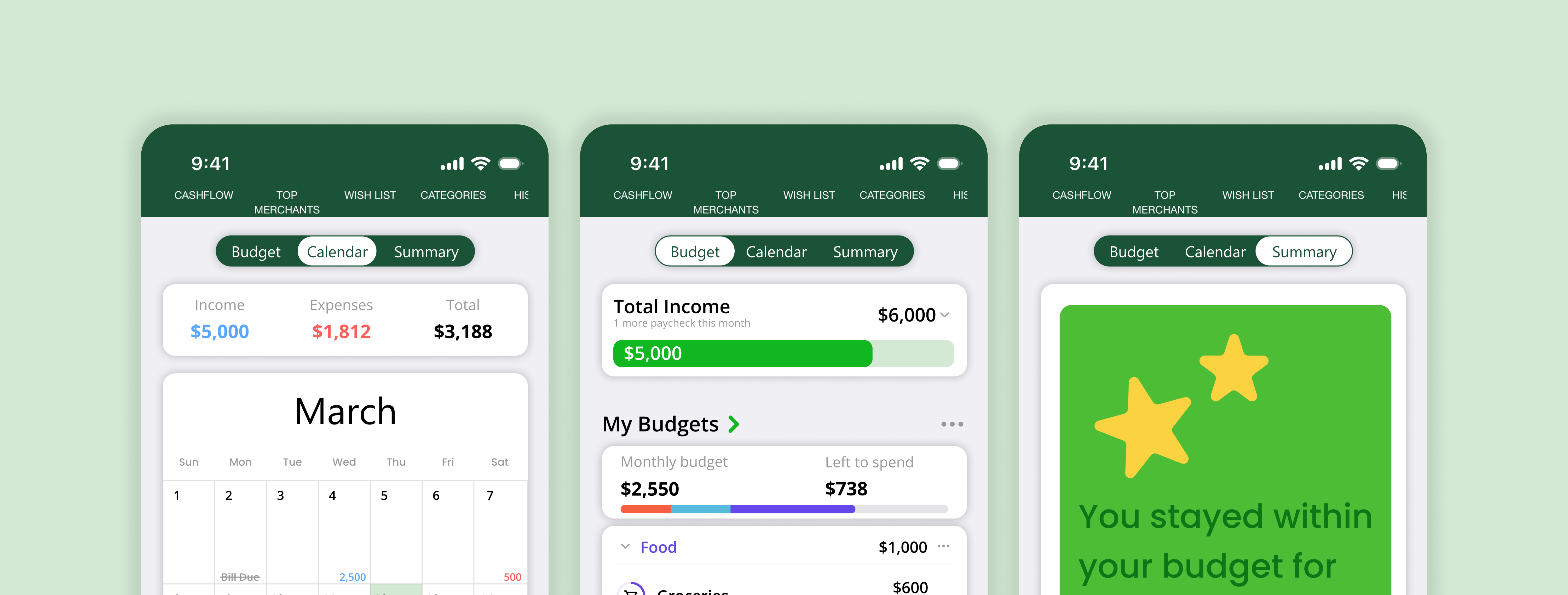
We proposed a MySpend Dashboard built around short-term financial management tools: budgeting, planning upcoming spending, and reflecting on financial progress.
The Context
Canadians spend an average of 15 hours per week worrying about money.
The Problem
Young users want to manage their money better, but the process can feel manual, unclear, and difficult to maintain.
Our target user was a university-aged Gen Z customer transitioning from spontaneous spending toward more responsible financial management.
We identified three central pain points: manual budget input, limited direction about what to do next, and static financial tools that make it difficult to build an ongoing habit.
User Needs
01
Less manual work
Users need a streamlined money-management experience that reduces the effort required to maintain a budget.
02
Clearer direction
Users need to understand their financial standing and what actions they can take next.
03
Habit-forming tools
Financial management needs to feel engaging enough for users to return to it consistently.
Research
Financial stress is high, while trusted and actionable guidance can be difficult to find.
Our research suggested that young consumers are actively looking for accessible financial tools and resources while facing growing anxiety around the cost of living.
At the same time, many young users rely on online financial advice. That creates an opportunity for a trusted financial institution to provide guidance that is more personalized and connected to a user's actual financial behaviour.
32%
of surveyed 18–35 year olds lack a clear strategy for managing money setbacks.
61%
of 18–35 year olds are stressed about their finances.
57%
of individuals aged 18–29 rely on online “finfluencers” for financial advice.
What We Learned
Three themes shaped the direction of our solution.
01
Accessible tools matter.
Young consumers are looking for financial tools and resources that are easier to access and understand.
02
Financial anxiety is growing.
Rising costs of living are increasing the pressure young users feel when managing everyday finances.
03
Trust creates an opportunity.
Online advice can be misleading, creating a need for more personalized and trusted financial guidance.
Current Alternatives
Existing budgeting tools still leave users doing too much work.
Excel
Requires manual input
High setup effort
No automatic insights
RBC NOMI Budgets
Limited to RBC customers
Overspend alerts can be inaccurate
Limited manual category customization
The Opportunity
Move MySpend beyond tracking transactions and toward effortless financial management.
Existing budgeting alternatives introduced their own friction. Spreadsheet-based budgeting requires manual input and significant setup, while competing banking tools can be limited by customization and platform constraints.
We saw an opportunity for TD to build on MySpend's existing financial data and reduce the amount of work required for users to understand and manage their money.
How might we
How might we enable Gen Z users to seamlessly keep up with their financial well-being on a regular basis?
Product Direction
Give users short-term tactical tools that make financial management easier to act on.
Rather than creating a separate financial experience, the concept builds on MySpend by connecting users' existing financial data with budgeting, planning, and personalized insights.
The Solution
A MySpend Dashboard for short-term financial management.
We proposed expanding MySpend with tactical tools that help users create, manage, and engage with their short-term financial goals.
The concept addresses two gaps we identified in the existing experience: a lack of actionable insights and an unintuitive, incomplete money-management process.
Pain Points Resolved
Lack of actionable insights
Unintuitive and incomplete money management
Value Provided
Digital financial tools
Short-term insights for a more holistic understanding of financial well-being
Final Design
Three features designed around how users manage money throughout the month.
01
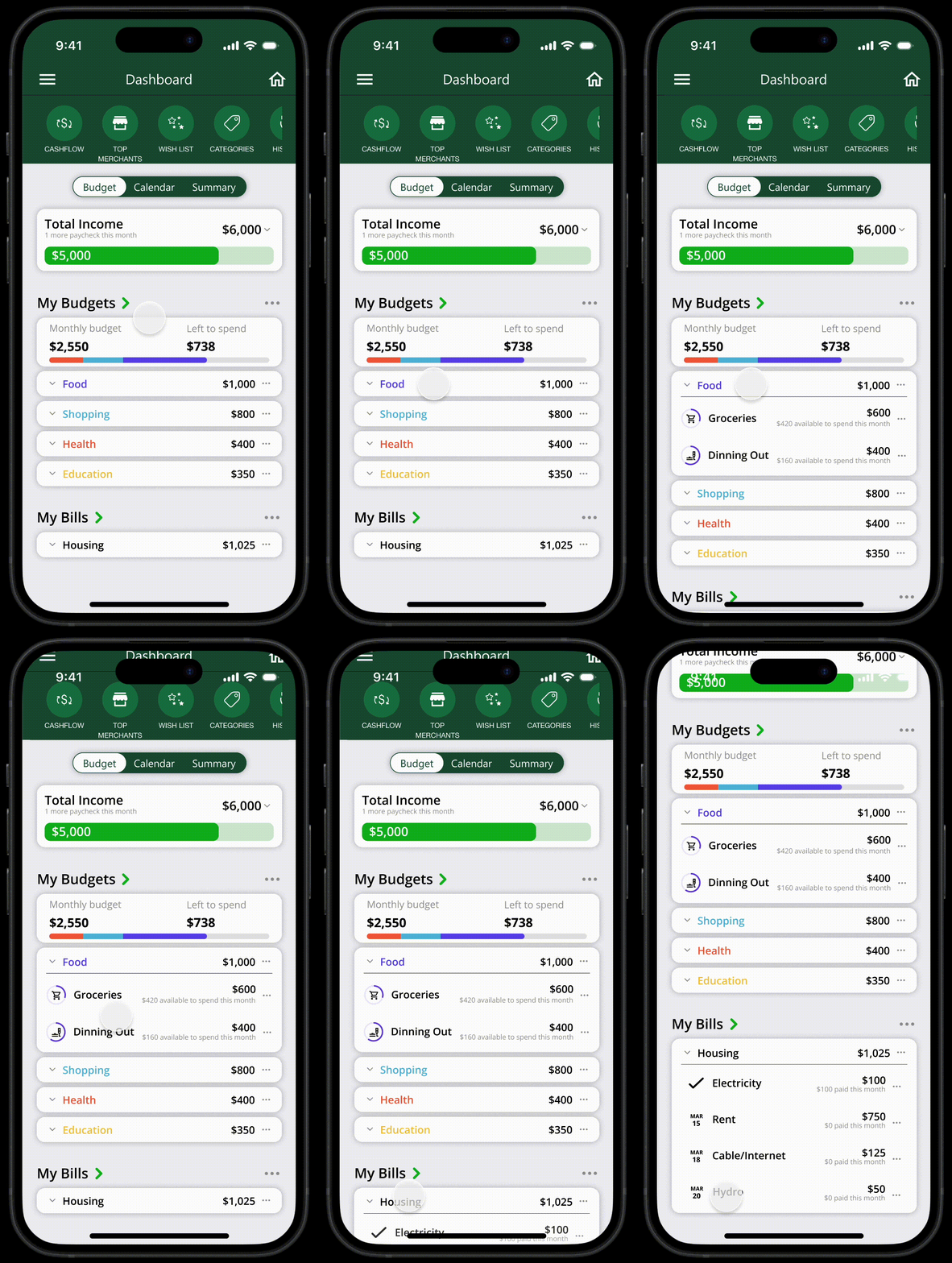
Budgeting dashboard
Make budgeting easier to set up and maintain.
The budgeting dashboard gives users a clearer view of their income, bills, and spending categories in one place. Personalization helps users understand their spending without relying on a manually maintained spreadsheet.
02
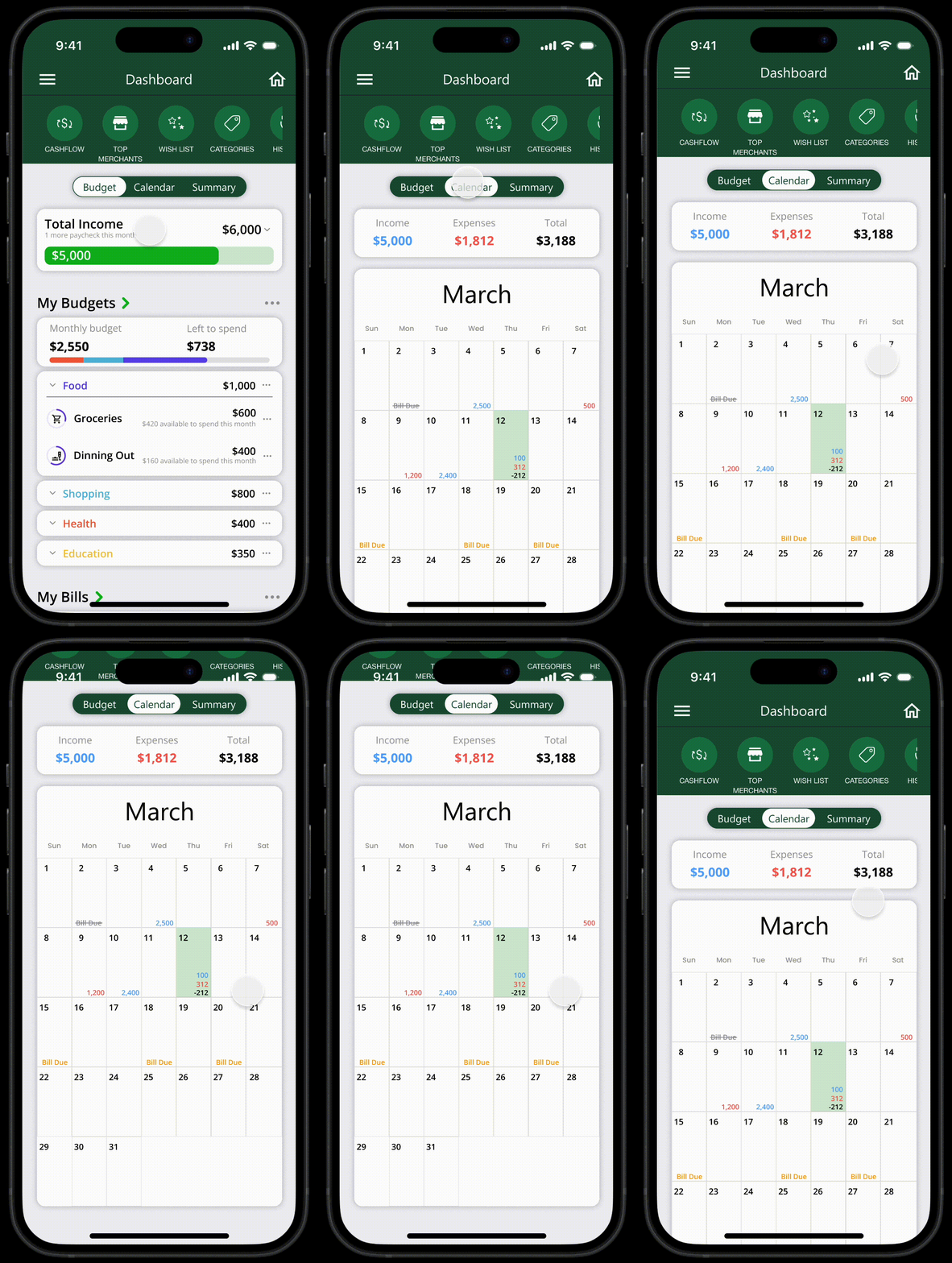
Spending calendar
Understand what's coming before you spend.
The spending calendar organizes upcoming financial activity into a more understandable view, helping users anticipate expenses and see how upcoming payments fit into their short-term financial picture.
03
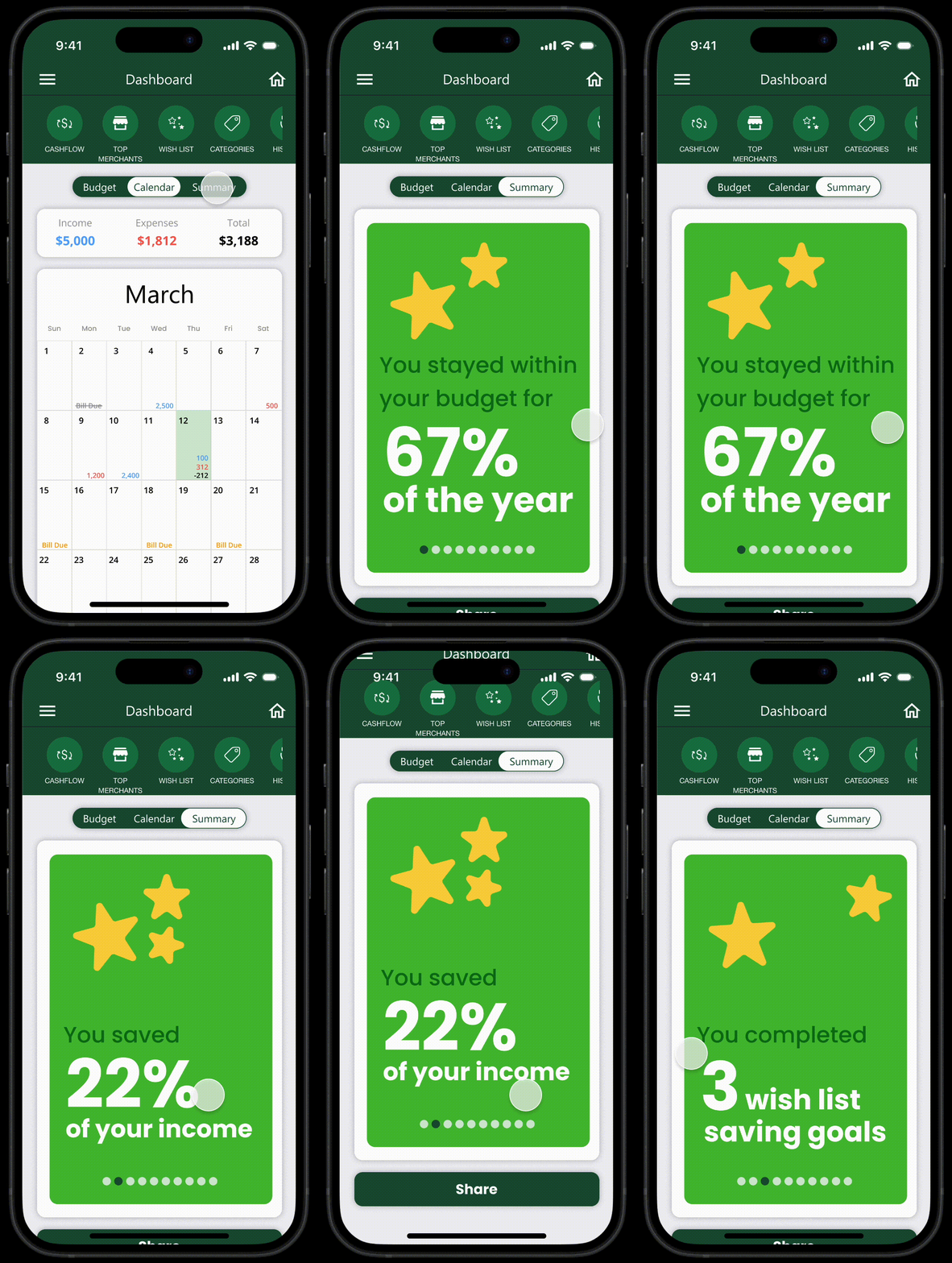
MySpend recap
Turn spending behaviour into useful insight.
The MySpend recap gives users a personalized summary of their financial activity, helping them reflect on spending patterns and better understand their overall financial well-being.
Product Strategy
Connecting user value to measurable business goals.
01
Improve retention and MAUs
Personalized budget and summary features can give users more reasons to return to MySpend regularly.
02
Enable product conversion
Relevant TD product recommendations can connect financial behaviour and goals with other products in the TD ecosystem.
03
Streamline banking
Spending visualizations and simpler budget setup can make financial information easier to understand and manage.
Success Metrics
Measuring whether the product creates value for users and TD.
Increase user retention
% of users using the new feature
Feature click-through rate
Increase in monthly active users
Increase adoption of TD products
Click-through rate on product promotions
% of users adopting new products
Improve Gen Z financial health
% of users spending less than typical
Qualitative user feedback
Implementation
Roll out gradually, learn from behaviour, then scale.
Jul 2025
Pilot
Internal testing with the team.
Exit criteria: Resolve usage bugs, validate feature discoverability, and ensure the UI is intuitive.
Oct 2025
Beta 1
Early testing with the top 5% of MySpend monthly active users.
Exit criteria: 25% product CTR and 10% product MAUs.
Dec 2025
Beta 2
Expand testing to the top 20% of MySpend monthly active users.
Exit criteria: 40% product CTR and 30% product MAUs.
Mar 2026
Launch
National rollout to Canadian users.
Exit criteria: Continuously monitor success metrics and average time between visits.
Risks & Mitigations
Anticipating what could prevent adoption.
01
Lack of product awareness
Cross-promote the updated MySpend experience across the TD ecosystem and other products and services.
02
Preference for external tools
Use product promotion and referral incentives to encourage Gen Z customers to try the new MySpend features.
03
Glitches and integration issues
Use beta testing to identify bugs while supporting users through FAQs, live chat, and contact support.
Outcome
Placing 2nd overall at ProdX.
Our team presented the MySpend Dashboard concept as a product strategy for helping Gen Z users manage their short-term financial well-being.
View our presentation
Reflection
What I learned
01
Start with the underlying job.
Mapping the jobs users were trying to accomplish helped us move beyond individual features and think about the broader financial-management experience.
02
Connect user value to product value.
The strongest product direction was not only useful to users; it also connected to retention, engagement, product adoption, and TD's broader ecosystem.
03
A concept needs a path to market.
Thinking through success metrics, rollout stages, exit criteria, and risks made the proposal feel like a product strategy rather than only a design concept.
End of case study